August 3, 2026
TERASAKI ELECTRIC CO., LTD.
TERASAKI ELECTRIC CO., LTD. (Head Office: Osaka, Japan; President and Representative Director: Taizo Terasaki, hereinafter referred to as "the Company") has delivered its Engine Room Simulator System (hereinafter referred to as "ERS"), developed and marketed by the Company, to the NATIONAL SHIMIZU POLYTECHNICAL COLLEGE (hereinafter referred to as "Shimizu Campus").
This Engine Room Simulator (ERS) was introduced to support the high-quality education and training programs pursued by Shimizu Campus, as well as the development of future marine engineers.
The simulator reproduces the engine rooms of multiple vessels, including the training ship Kazahaya equipped with a diesel main engine, other training vessels, and coastal general cargo ships. Trainees can switch between different vessel models and conduct practical training on each vessel type. In addition, the ERS supports Engine-room Resource Management (ERM*1) training, which was newly incorporated into the STCW Convention, thereby facilitating more practical and effective seafarer education.
The engine training room at Shimizu Campus consists of three areas: an Engine Room Section, an Engine Monitoring Room Section, and an Instructor Section. The engine room environment is recreated using large-display monitors, while the Engine Monitoring and Alarm System and Engine Monitoring Console panels are simulated using 24-inch monitors.
Furthermore, authentic equipment sounds, such as circuit breaker closing sounds during switchboard operations, engine start-up sounds, and motor operating sounds, have been incorporated into the simulator. This provides a highly realistic training environment that closely replicates actual onboard conditions.
Instructors can use a dedicated terminal to create various operating conditions and abnormal scenarios, enabling students to practice responding appropriately to abnormal situations under conditions that closely resemble actual vessel operations.
In addition, the Engine Room and Engine Monitoring Room can be physically separated during training, creating an environment in which trainees cannot visually confirm each other's status. This arrangement also enables communication training using transceivers.
The Company will continue to provide maritime education and training systems tailored to customer needs, contributing to the development of marine engineers and the enhancement of maritime transportation safety.
*1: ERM (Engine-room Resource Management)
A method introduced by the 2010 amendments to the STCW Convention to enhance safe vessel operations through the effective management and optimal use of engine-room resources, including personnel, equipment, and information.
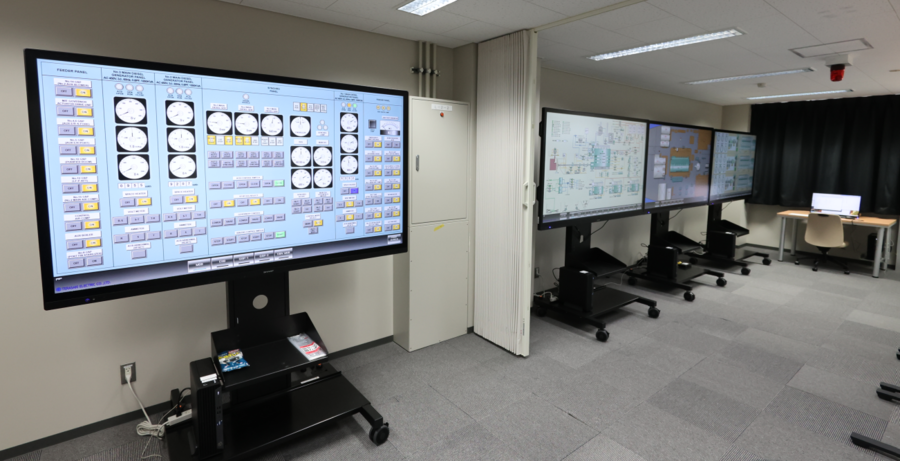
Photo 1: Engine room section with the engine room environment reproduced on large LCD displays
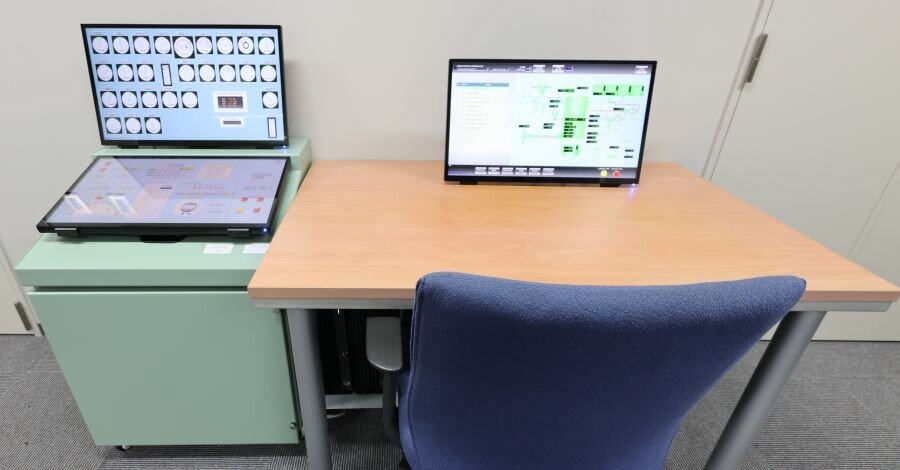
Photo 2: Engine monitoring room section with the engine monitoring panel reproduced on monitors